Vaginal probiotics
$35.00
Vaginal probiotics are probiotic formulations containing beneficial microorganisms, commonly Lactobacillus species, investigated in research involving vaginal microbiota, microbial balance, colonization, pH regulation, and vaginal dysbiosis. Research has examined their potential effects on bacterial vaginosis, vulvovaginal candidiasis, and other microbiome-related conditions, although outcomes vary by strain, formulation, route of administration, and study design.
Vaginal Probiotics – Research Product
| Product Information | Details |
|---|---|
| Product Name | Vaginal Probiotics |
| Brand | LP Peptides |
| SKU | VAGINAL-PROBIOTICS |
| Category | Probiotics & Microbiome Research |
| Research Product | Vaginal Probiotics |
| Specification | Refer to current LP Peptides catalog |
| Form | Probiotic Formulation |
| Intended Use | Research Use Only |
| Price | Contact for Current Pricing |
What are Vaginal Probiotics?
Vaginal probiotics are formulations containing selected live microorganisms intended for research involving the vaginal microbiome. Many research formulations focus on Lactobacillus species because lactobacilli are frequently associated with vaginal microbial communities and can contribute to an acidic microenvironment through production of lactic acid.
Research into vaginal probiotics has examined how probiotic microorganisms may interact with the existing vaginal microbiota, including mechanisms involving microbial competition, adhesion, acid production, bacteriocins, and interactions with the vaginal mucosal environment.
Experimental and clinical research has investigated vaginal probiotic formulations in relation to bacterial vaginosis (BV), vulvovaginal candidiasis (VVC), vaginal microbiota composition, and recurrence of vaginal dysbiosis. However, results can differ substantially between probiotic strains and formulations. A 2026 meta-analysis, for example, reported uncertain evidence regarding Lactobacillus vaginal tablets and recurrence of BV, highlighting the importance of strain-specific and formulation-specific research.
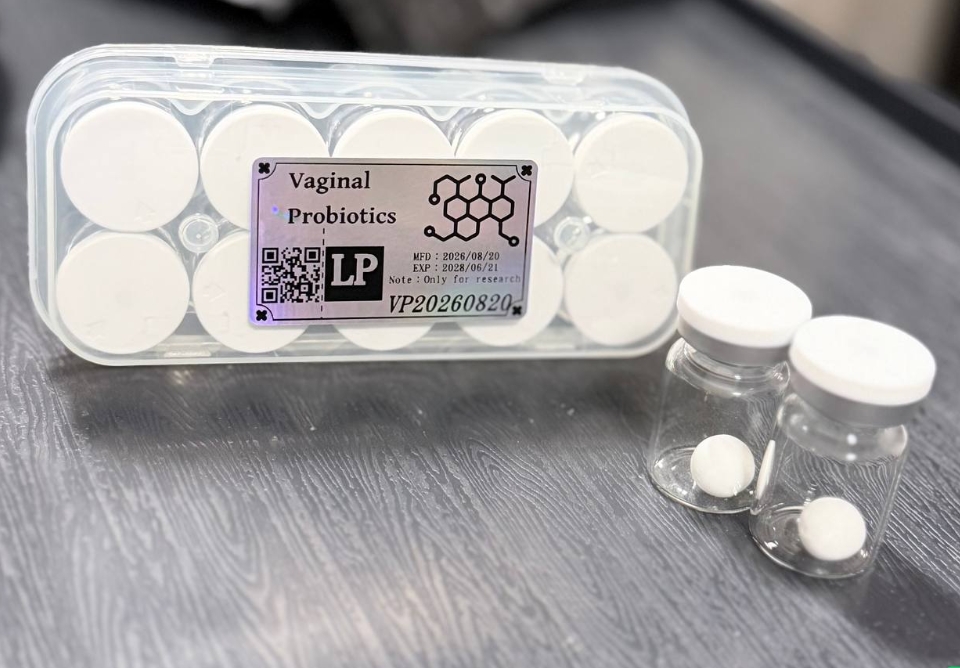
LP Peptides supplies Vaginal Probiotics as a research material for qualified laboratory applications, with applicable product identification and batch documentation.
Research Applications
Vaginal probiotics may be investigated in research involving:
- Vaginal microbiome research
- Lactobacillus biology
- Microbial colonization
- Vaginal microbiota composition
- Microbial competition
- Vaginal pH research
- Bacterial vaginosis research models
- Vulvovaginal candidiasis research
- Microbiome-host interactions
- Probiotic strain characterization
- Microbial adhesion studies
- Biofilm research
- Immune-response research
- Live biotherapeutic product research
- Microbial ecology
Research has examined mechanisms through which Lactobacillus species may influence the vaginal environment, including lactic-acid production, microbial competition, adhesion, and interactions with other microorganisms.
Research Context
The vaginal microbiome is a complex microbial ecosystem in which Lactobacillus species are frequently dominant. Research suggests that lactobacilli can contribute to the maintenance of an acidic environment and may influence the ability of other microorganisms to establish or proliferate.
Vaginal probiotic research has therefore focused on whether selected probiotic strains can influence microbial community composition or support restoration of a Lactobacillus-dominant microbiome following microbial disruption.
Studies have investigated both oral and vaginal administration approaches, with research protocols varying considerably in probiotic strain, colony-forming units, formulation, administration route, and duration.
Evidence remains formulation- and strain-dependent. Reviews have reported potential benefits in some research settings while also identifying substantial heterogeneity between studies and the need for better standardized trials.
Research findings should therefore be evaluated according to the specific microorganism or strain, formulation, experimental model, methodology, and study population.
Commonly Compared Research Products
| Related Research Products |
|---|
| Oral Probiotics |
| Lactobacillus Research Cultures |
| Prebiotic Formulations |
| Synbiotic Research Formulations |
| Postbiotic Research Materials |
| Microbiome Research Products |
Each probiotic or microbiome research product should be evaluated independently according to its microbial composition, formulation, research objective, and applicable laboratory controls.
Laboratory Handling
Vaginal Probiotics should be handled according to the current LP Peptides product documentation, lot-specific information, and applicable laboratory SOP.
Qualified research personnel should:
- Confirm product identity and microbial composition.
- Review the current Certificate of Analysis (COA).
- Verify applicable strain and batch information.
- Confirm the stated colony-forming-unit specification where applicable.
- Maintain appropriate laboratory inventory records.
- Follow applicable microbiological handling procedures.
- Avoid unnecessary environmental exposure.
- Maintain appropriate contamination-control procedures.
- Document relevant experimental parameters.
- Follow applicable laboratory biosafety procedures.
Storage Guidelines
| Storage Condition | Recommendation |
|---|---|
| Product Form | Follow current product-specific documentation. |
| Temperature | Follow the lot-specific storage requirements supplied with the product. |
| Environment | Protect from inappropriate heat, moisture, light, or other unsuitable environmental exposure. |
| Handling | Use appropriate microbiological handling and contamination-control procedures. |
| Packaging | Keep packaging properly closed and intact according to product instructions. |
| Documentation | Follow the current COA, product label, and laboratory SOP. |
Research Use Disclaimer
Vaginal Probiotics supplied by LP Peptides are intended strictly for qualified laboratory research purposes.
This product:
- Is not intended for human use.
- Is not intended for veterinary use.
- Is not intended for consumption.
- Is not supplied as a treatment or medical product.
- Should only be handled by appropriately qualified research personnel.
- Should not be represented as an approved therapeutic product.
Information provided on this page is for scientific reference and product identification and does not constitute medical advice, treatment guidance, or a therapeutic claim.
COA & Quality Assurance
| Quality Checklist |
|---|
| Certificate of Analysis (COA) |
| Product identity |
| Batch number |
| Testing date |
| Microorganism or strain information where applicable |
| Colony-forming-unit specification where applicable |
| Product specification |
| Packaging information |
| Storage requirements |
| Applicable microbiological quality-control records |
Researchers should review the applicable lot-specific documentation before using Vaginal Probiotics in an experimental setting.
Frequently Asked Questions
| Question | Answer |
|---|---|
| What are Vaginal Probiotics? | Vaginal probiotics are probiotic formulations containing selected microorganisms, commonly Lactobacillus species, investigated in research involving the vaginal microbiome and microbial balance. |
| What are Vaginal Probiotics studied for? | Research may examine vaginal probiotics in relation to microbiota composition, microbial colonization, bacterial vaginosis, vulvovaginal candidiasis, vaginal pH, and microbiome-host interactions. |
| Which microorganisms are commonly researched? | Lactobacillus species are among the most frequently investigated microorganisms in vaginal probiotic research. |
| How do Lactobacillus probiotics relate to vaginal microbiome research? | Research has examined mechanisms including lactic-acid production, microbial competition, adhesion, and interactions with the vaginal environment. |
| Are all vaginal probiotics the same? | No. Probiotic formulations can differ by microorganism or strain, concentration, formulation, delivery method, and study protocol. These differences can affect research outcomes. |
| Are Vaginal Probiotics intended for human use? | No. LP Peptides supplies this research product for qualified laboratory research purposes. |
| Are Vaginal Probiotics an approved treatment? | A research product should not be represented as an approved therapeutic product. Evidence and regulatory status should be evaluated separately for each specific formulation and jurisdiction. |
| Can Vaginal Probiotics be compared with oral probiotics? | Yes. Oral and vaginal probiotic approaches have both been investigated, but they differ in delivery route and research methodology. |
| How can I verify a probiotic batch? | Review the product label, SKU, batch number, applicable strain information, current COA, and product documentation supplied with the material. |
| How should Vaginal Probiotics be stored? | Researchers should follow the current lot-specific storage requirements and applicable laboratory SOP rather than relying on generic storage assumptions. |
| Is there consistent evidence for vaginal probiotics? | Evidence varies by strain, formulation, and outcome. Reviews have identified promising findings in some areas while also noting substantial heterogeneity and uncertainty across studies. |
Related products

BCP-57

DSIP
DSIP (Delta Sleep-Inducing Peptide) from LP Peptides is a research peptide investigated in sleep-related research, neurobiology, neuroendocrine signaling, stress-response studies, and peptide-mediated cellular pathways. Supplied as a laboratory research material with applicable batch documentation. Research use only; not for human or veterinary use.
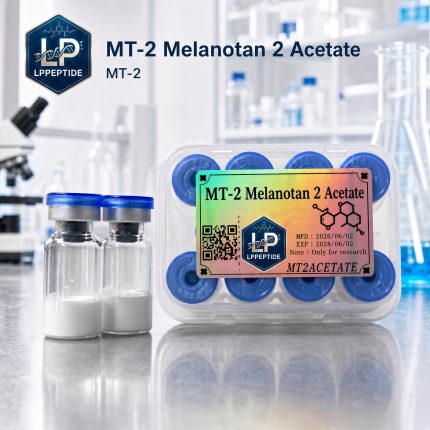
MT-2 (Melanotan 2 Acetate)
MT-2 (Melanotan 2 Acetate) from LP Peptides is a synthetic melanocortin-related research peptide studied in melanocortin receptor signaling, pigmentation pathways, peptide-receptor interactions, and cellular research. Supplied as a laboratory research material with applicable batch documentation. Research use only; not for human or veterinary use.
MT1